
Month: April 2026

Financial Advising: 14 Golden Rules

In managing high-net-worth portfolios, we find that the foundation of success in preserving and growing that wealth lies in behaviours that can be standardised: “History does not repeat itself, but it rhymes.” Mark Twain.

A holistic view of wealth, in which the business sphere, the sphere of real assets (including property, works of art, jewellery, and precious metals), and the sphere of financial assets are both influencers and influenced.

From behavioural patterns, we can establish some rules that may be useful in preserving wealth:

1. Capital Preservation

An investor should always operate on a capital-preservation basis. The risk profile should be used as a limit.

An investor with an aggressive profile should not, nor needs to, be invested at all times.

2. Risk must be assumed in advance

There is no return without taking risk. What matters is understanding the risk to which we are exposed, so that we can then assume it.

3. Cash is king

Maintaining liquidity in the portfolio should be regarded as an important asset to hold. Accept the cost of maintaining high levels of liquidity as a powerful tool.

4. Diversification should be pursued

In all its breadth—asset classes, geographic regions, issuers, financial intermediaries, to name only the main ones.

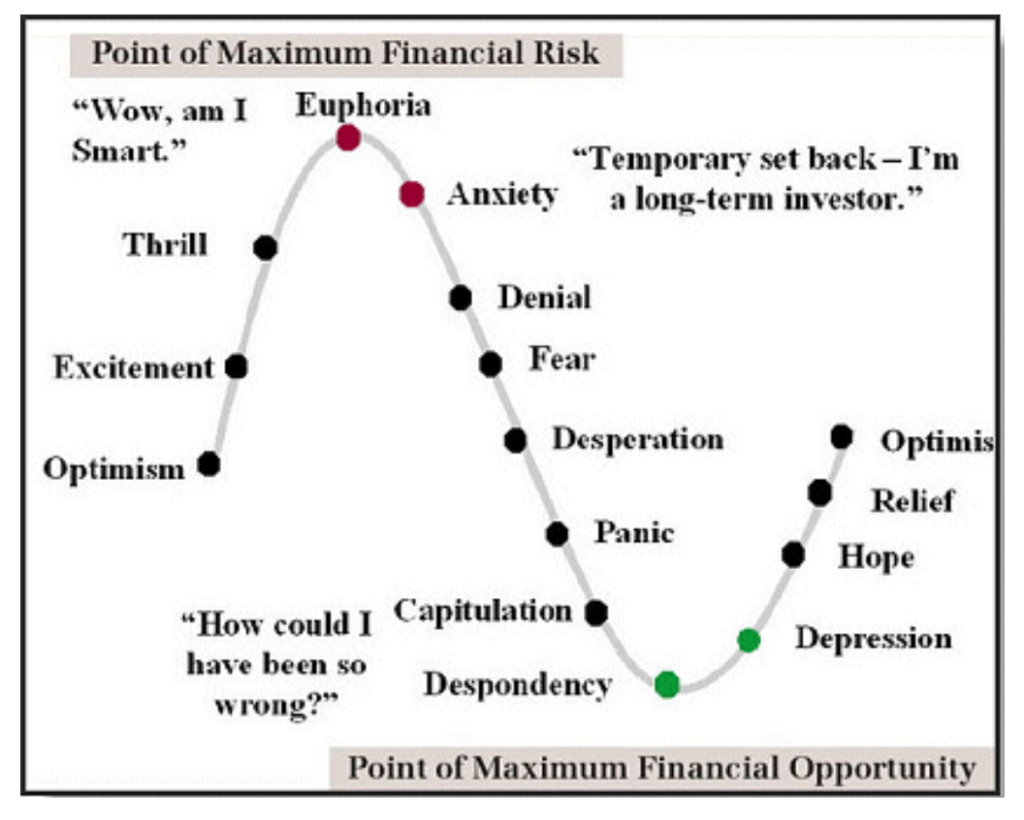
5. Be consistent.

The same rationale that leads to the investment decision in a position should also be used to define your exit.

6. Surf the wave

Once invested, let profits “run”, with the intention of benefiting from the trend.

7. Be pragmatic

At the time of investing, the objective is always to sell at a higher price than the purchase price.

8. Never increase a losing position without defining a stop loss in advance

When we intend to add to an asset which, despite its negative performance, we believe has recovery potential, we should set in advance a limit price at which we must exit the position if our scenario does not materialise.

9. Invest based on facts

Do not invest for personal reasons. Accumulated financial wealth has a history that

must be preserved.

10. Conflicts of interest

It is important to bear in mind that financial intermediaries may lose money when they extend credit, but inevitably this same balance becomes positive when they manage third-party assets.

11. In periods of low returns, fees, taxes, and dividends are highly relevant

Being demanding is important. With the current transparency required by MiFID II, it is important, when making decisions, to carefully analyse all associated costs: direct and indirect.

12. The market tends to revert to the mean in the long term

The law of supply and demand is a concept we should understand and accept.

13. Be as disciplined as possible

All major losses are associated with failing to comply with this rule.

14. Understand and accept human nature

The human factor leads to “infractions”, the main ones being:

  1. Overconfidence, which leads to a lack of discipline
  2. Inability to manage large amounts of information, which sometimes generates overconfidence
  3. In times of widespread declines, the need for “company”
  4. Anchoring that prevents objectivity

Source: The Kirk Report

The rules presented are not binding. Common sense should always prevail. The time horizon may mean that some rules are far more important than others.

From investment to return: 3 possible Private Equity exit routes

What is Private Equity?

Private Equity is an asset class based on the use of private capital to invest in companies that are not listed on a stock exchange. A large share of transactions in this industry involves a significant capital injection and, in some cases, that capital is financed largely through debt. One of the most famous debt-financed deals was KKR’s acquisition of RJR Nabisco in 1989, for around $24 billion (approximately $104 per share). This transaction is an example of what is known as a take-private transaction—a situation in which a Private Equity fund acquires a publicly listed company with the aim of taking it off the public market, managing it privately, away from the pressures and regulatory obligations associated with being listed. The value was considered astronomical at the time, and the corporate drama surrounding it was immortalised in a best-selling book and a film, both with the same name: Barbarians at the Gate.

How does a Private Equity fund work?

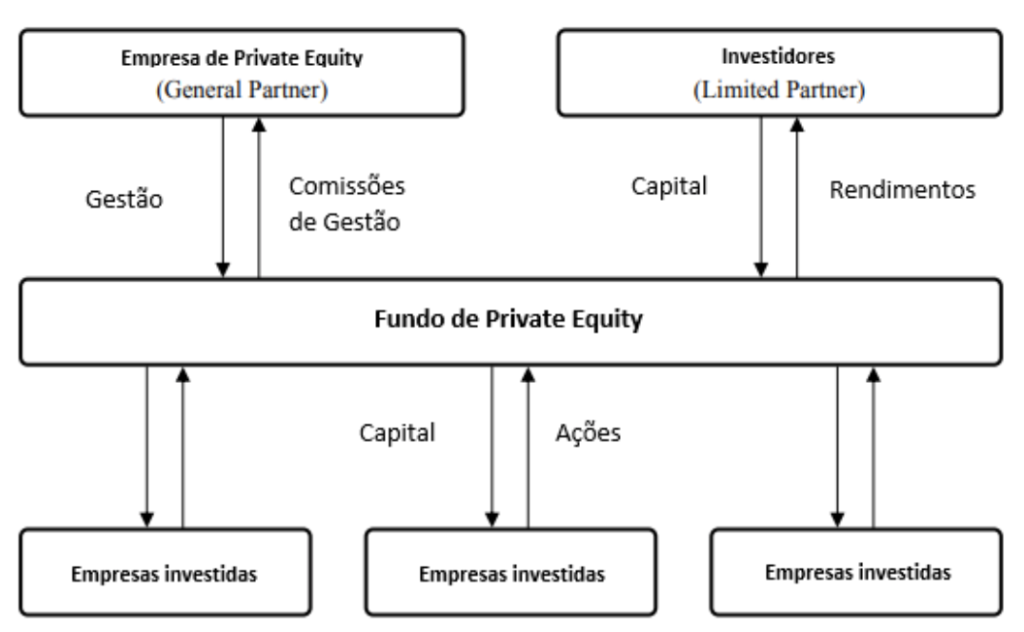
To begin an investment, the Private Equity firm first creates a vehicle specifically for that purpose: a closed-end fund. This fund is typically made up of two types of participants: limited partners and general partners.

The general partners are represented by the Private Equity firm itself, commonly referred to as the Management Company, and are responsible for establishing and managing the fund. They typically contribute around 2% of the total capital.

The limited partners—who contribute the remaining 98%—are typically institutional investors such as pension funds, insurance companies or sovereign wealth funds, as well as high-net-worth individuals (HNWIs) seeking to diversify their portfolios with exposure to alternative assets.

3 ways to exit a Private Equity investment

After investing in and managing a portfolio of companies, the time comes when the fund needs to realise its return—that is, to sell its holdings. This decision is known as an exit strategy, and it is one of the most debated topics within the venture capital ecosystem, as it makes it possible, to some extent, to draw conclusions about the ability to generate returns and the value creation of the Private Equity industry for the economy.

Below are some of the most common exit strategies used in Private Equity.

Secondary buyout

In this model, a Private Equity firm sells one of its portfolio companies to another Private Equity firm. It is an option that generates some controversy: if the first fund has worked on the company for several years—improving margins, optimising costs and strengthening cash flow generation—the question remains as to how much room for improvement is left for the second. In practice, this exit tends to occur when a fund is nearing the end of its life cycle, which puts pressure on fund managers to find a quick and smooth way to deliver returns to limited partners. The inability to exit an investment quickly can damage the reputation of the fund and the GP, making it harder to raise capital in the future. For the buyer, it may represent an opportunity to extract value that the seller, due to lack of time or some other reason, was unable to realise.

Trade Sale

In this case, the Private Equity firm sells its stake to a strategic buyer—typically a company operating in the same sector as the portfolio company. Because it knows the market well, this type of buyer is often willing to pay a premium for the acquisition and tends to move more swiftly through due diligence processes. Like a secondary buyout, this is a fast and flexible exit, allowing the fund to sell its stake in full and immediately.

IPO

An Initial Public Offering (IPO) is the exit strategy in which the company is listed on a stock exchange, making its shares available for trading in the market. The return for the Private Equity fund results from the difference between the amount initially invested and the value realised from selling the shares in the market—plus any dividends and other returns generated over the holding period.

It is common for the fund to sign a lock-up agreement—often required by the banks coordinating the transaction—which prevents the sale of the remaining shares for a period of 6 to 12 months after the IPO, avoiding immediate selling pressure on the stock. An IPO is generally seen as a sign of quality: it is usually the best companies in the portfolio that reach the market in this way.

Investing in Times of War

Last week, several news outlets recalled a 2014 interview with Warren Buffett regarding the Russian invasion of Ukrainian soil. In that interview, Buffett stated that “the last thing you should do is hold cash during a period of war.” He also said that, during World War II, the stock market gained value, continued to gain value in the following years, and that the US economy actually grew in the years that followed.

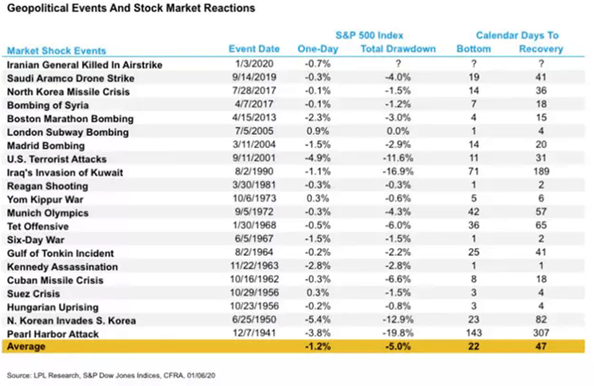
In a historical analysis between 1941 and 2020 of the S&P 500 index in relation to war-related events and terrorist attacks, it can be observed that:

  • After the attack on Pearl Harbor in 1941, the US declaring war on Japan that December, and Germany declaring war on the US, this index gained 15.3% a year later.
  • On average, this index has fallen by around 6.5% during the 3 months following the start of an armed conflict and risen by around 13% 12 months later.
  • In both the Vietnam War and the Gulf War, this index’s declines were short-lived, while the gains lasted much longer.

Another historical analysis worth making is of the bond market and its comparison with the stock market.

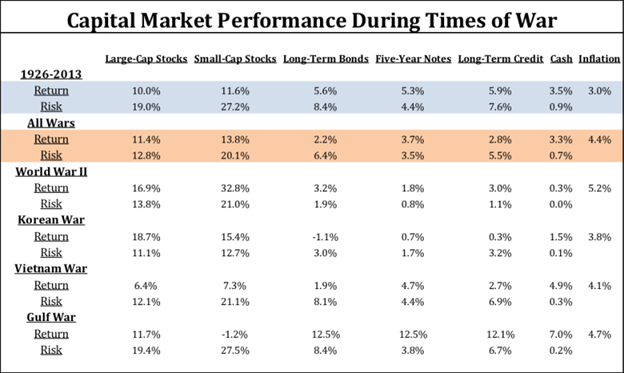
In an analysis between 1926 and 2013, although fixed income serves to protect portfolios from greater volatility, historical data show that this asset class has consistently been an underperformer, both on average and during periods of war.

The explanation for this may be related to inflation, which has had a negative correlation with bonds. During periods of war, governments tend to increase their debt, raising the yield on their securities and driving down the price of bonds on the market.

Sources: S&P 500 Index for large-Cap stocks; CRSP Deciles 6-10 for small-cap stocks; long-term US government bonds for long-term bonds; five-year US Treasury notes for five-year notes; long-term US corporate bonds for long-term credit; one-month Treasury bills for cash; and the Consumer Price Index for inflation. All index returns are total returns for that index. Returns for a war-time period are calculated as the returns of the index four months before the war and during the entire war itself. Returns for “All Wars” are the annualized geometric return of the index over all “war-time periods.” Risk is the annualized standard deviation of the index over the given period. Past performance is not indicative of future results.

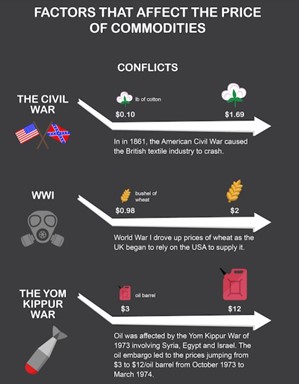
Commodities are another asset class that has been affected during periods of war, as they directly and indirectly impact each country’s economy.

Back in the 19th century, cotton was booming, closely tied to slavery in the southern states. The US sold its cotton mainly to Manchester and Liverpool, and with the outbreak of violent conflicts that led to the Civil War in 1861, cotton prices rose by more than 1,500%, causing the United Kingdom’s economy to collapse.

During World War II, the United Kingdom suffered another economic squeeze when, due to a wheat price increase of more than 100%, the US was forced to cut its production and, consequently, its exports.

The Yom Kippur War in 1973, which pitted Syria and Egypt against Israel, caused oil prices to surge 300%, triggering an oil crisis and, consequently, a global economic crisis, as the Arab OPEC countries boycotted sales of this commodity to the US and to the European countries that supported Israel.

The current Russia-Ukraine conflict is highly significant because it coincides with one of the largest potential increases in inflation since World War II. This is also why financial markets are experiencing a significant rise in volatility. Investors are closely watching inflation and the measures each central bank is taking to control it.

The key to investing, whether in times of war or otherwise, is diversification.

Talk to us.

For Over Thirty Years, the Financial Advisor’s Demise Has Been Predicted

In 1998, E*TRADE gave investors direct access to the stock exchanges for the first time. Until then, buying a share meant calling a broker, who would execute the order and charge a generous commission for it. Suddenly, anyone could do it themselves, in seconds, for a fraction of the cost. The threat seemed existential: if the client can execute trades alone, why would they need an intermediary?

In 2008, “robo-advisors” went further still. They didn’t just execute orders – they built diversified portfolios, rebalanced automatically, and did it all at close to zero cost. The promise was seductive: professional management, without the professional’s price tag. Betterment and Wealthfront refined this model and were explicit about their ambition: the human advisor was an unnecessary cost that technology had made redundant.

In 2020, Zoom removed the geographic friction from the relationship – if physical presence was no longer necessary, the local advisor lost one of their most tangible advantages. And in 2022, ChatGPT demonstrated that a machine could answer, in natural language and within seconds, some of the questions that once required years of financial training.

Each of these moments was real. Each technology did exactly what it promised.

And yet, the financial advisor did not disappear.

The narrative is always the same: technology will make the advisor obsolete. The client will manage their own money. Costs will approach zero. The human element will disappear from the equation.

Except it didn’t.

Today, there are seven times more financial advisors than there were in 1998. The industry is growing faster than most professions. And Betterment itself – the very company that declared advisors obsolete a decade ago – now sells software to support financial advisors.

The confusion stems from a distinction that is rarely made clearly: the difference between the execution layer and the value layer.

The execution layer – buying and selling assets, rebalancing portfolios, comparing funds, processing orders – has always been, and will continue to be, progressively automated. That’s a good thing. It means fewer errors, lower costs, greater speed. Technology does this better than any human, and it would be foolish to resist that reality.

But the value layer is different. And this is where the financial advisor is irreplaceable.

When markets fall ten percent in a matter of days, the client doesn’t need an algorithm. They need a voice to help them avoid rash, “emotional” decisions. Panic selling at the lows, for instance, followed by failing to re-enter at the highs, is the pattern that destroys more wealth than any crisis…

No app can replace human conversation in that moment.

When someone decides to retire early, sell their business, move abroad, or plan the transfer of wealth to their children, the decision isn’t a mathematical one. It’s contextual, emotional, and deeply personal. It calls for someone who knows the person’s history and values – not a model optimizing for a single isolated goal.

The empirical evidence is clear and consistent: clients who work with a financial advisor feel less anxious about their financial future, save more, and build wealth at a faster annual rate than those who manage their money on their own. Over the years, this difference compounds into extraordinary figures.

And the most revealing finding of all: this added value doesn’t come from stock picking, market timing, or even asset allocation. It comes exclusively from “someone” who helps the client stay the course when everything around them suggests abandoning it. From “someone” who asks the right questions before a difficult decision. From “someone” who translates market noise into context that’s understandable and actionable.

This cannot be automated.

Artificial Intelligence tools will automate administrative work, speed up analysis, personalize communication at scale, and free up time. A lot of time. And that time will be reinvested in what truly sets us apart: Trust.

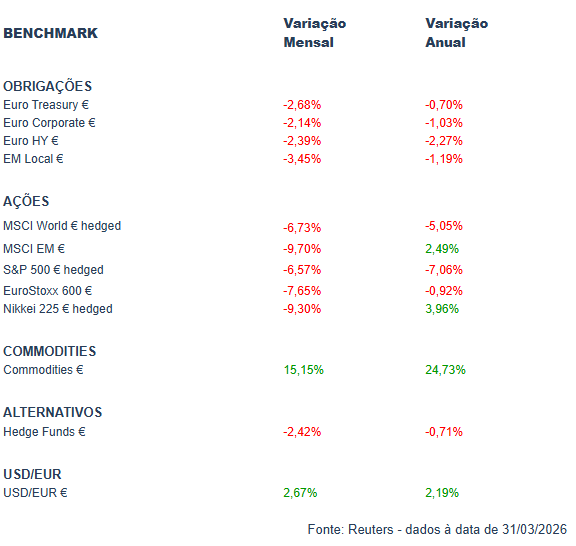
March marked by volatility and pressure in the Middle East

March turned out to be a difficult month for most financial assets, reflecting the military intervention by the United States and Israel in Iran, which escalated to other parts of the Middle East, blocked the Strait of Hormuz, and triggered a sharp rise in oil prices and other energy goods.

Losses were particularly significant in equity markets, driven by rising uncertainty and risk aversion amid fears of an inflationary surge accompanied by economic slowdown (stagflation) that could force central banks to raise benchmark interest rates. The commodities index was the notable exception, climbing more than 15%, driven by higher oil and refined product prices, as well as certain agricultural products due to their use in biofuel production and concerns over fertilizer shortages.

Despite the declines, markets behaved in an orderly manner for the most part, without panic, recovering whenever there was any prospect that the conflict might end soon—something clearly visible in the final session of the month.

Asset Classes:

March marked by volatility and pressure in the Middle East

March was marked by geopolitical tensions in the Middle East, following the attack by US and Israeli armed forces on Iran. Amid an uncertain environment, episodes of volatility resurfaced, as investors sought to anticipate the duration and extent of the conflict’s impact on the global economy. Concerns over more persistent inflationary pressures overshadowed the debate on the number of rate cuts expected this year, driving a bear flattening move across major yield curves—with sharper increases in short-term rates compared to longer maturities. Beyond the instability in the Middle East, the month also brought episodes of distrust surrounding certain entities operating in the private credit market segments, contributing to a widening of corporate risk premiums, both in the investment grade and high yield segments, interrupting the spread compression trend seen in previous months. Emerging market debt was also dragged down by this risk-averse sentiment, as the specter of inflation resurfaced.

The impact of the military escalation in the Middle East on equity markets was significant and widespread. The S&P 500 approached correction territory relative to its January high, while the STOXX 600—which initially reacted more sharply to the war before partially recovering—posted one of its worst monthly performances since 2022. Japan and Emerging Markets were hit hardest. The critical variable remains the duration of the disruption in the Strait of Hormuz. Sectoral dispersion was notable. The Energy sector stood out with positive returns, benefiting from the risk premium embedded in oil and natural gas prices. The Technology sector, on the other hand, was the most penalized, pressured both by a defensive rotation and renewed concerns over the impact of Artificial Intelligence (AI) on business models whose value chains may be redefined. US markets showed greater relative resilience compared to Europe, with the latter suffering more due to its greater exposure to the energy shock. The market’s main concern is that the military escalation, and the associated energy disruption, could translate into a stagflationary shock, reducing visibility on the direction of monetary policy and anchoring expectations of higher rates for longer.

In commodities, it was a month of gains exceeding 15% in the raw materials index, with the war in the Middle East driving the main movements across its components, though not all in the same direction. Oil was among the biggest gainers, with the US benchmark rising more than 50%, given the severe constraints in the Strait of Hormuz that led to a sharp drop in global supply. Among industrial metals, copper posted some losses amid weaker economic sentiment, but aluminum rose to four-year highs, as a significant share of its production is based in the Middle East. US natural gas changed little, in contrast to European and Asian benchmarks, which surged in reaction to the constraints in Qatar. Gold lost more than 10%, pressured by the broad decline in financial assets and expectations of higher interest rates. Agricultural products rose, supported by fertilizer shortages and increased demand for biofuels.

In the foreign exchange market, the dollar strengthened in March due to increased risk aversion amid the war in the Middle East. The US currency was supported by capital flows seeking safe haven. The EUR/USD fell to $1.14 (its lowest level since August 2025). The pound gained ground against the euro until March 19. The British currency benefited from expectations of interest rate hikes by the Bank of England to combat inflation, reversing earlier expectations of imminent cuts. Subsequently, the pound underwent a downward correction as stagflation risks increased. The yen came under renewed pressure, now that other central banks may also raise interest rates this year, or at least refrain from cutting them. The USD/JPY traded above 160 yen at one point, prompting Japanese authorities to threaten currency intervention. The Brazilian real was volatile but found structural support as a net exporter of raw materials. The USD/BRL faced upward pressure due to risk-averse sentiment, which was offset by the country’s crude oil and grain export revenues.

Conclusion:

March was a month of adjustment and greater caution. Although markets avoided panic, the reality of higher energy prices and the possibility that interest rates may not fall as soon as expected changed the rules of the game. The resilience shown at the end of the month offers some encouragement, but vigilance over trade routes and production costs will remain a priority for the rest of the year.