
Author: GWM

What’s the Best Time to Invest? If Not Now, When?

This is one of the most common questions among investors. The idea of waiting for a market correction to invest at a lower price seems logical at first glance. However, reality shows that consistently getting the timing right is extremely difficult, even for professionals.

Is There a Better Time to Invest Than Today?

Many investors believe that by waiting a little longer, they will find a more attractive entry point. The problem is that this decision requires predicting the future direction of the markets, something no one can do consistently.

Financial markets are influenced daily by countless economic, political, and corporate factors. While periods of correction and volatility are inevitable, it is also true that markets have shown a tendency to grow over time.

By delaying an investment decision in the hope of a drop, investors risk missing out on days, weeks, or months of growth. And recovery periods often emerge quickly and unexpectedly, making it difficult to identify the ideal time to enter.

In other words, waiting for the perfect moment can mean missing out on real growth opportunities.

Invest It All at Once or Gradually?

When there is a sum of money available to invest, a second question often arises: is it better to invest it immediately or spread the investment out over time?

Historically, investing the full amount at once has produced better results in most situations. The reason is simple: the longer the money stays invested, the longer it benefits from the markets’ growth potential.

That said, phased investment can make sense for investors who feel uncomfortable with the possibility of a short-term correction. In these cases, the main advantage isn’t necessarily financial but emotional, helping to reduce the anxiety associated with the timing of entry.

The ideal decision will always be the one the investor can maintain with discipline and consistency.

The Importance of Getting Started

Successful investing doesn’t depend on finding the perfect entry point. Above all, it depends on staying invested long enough to benefit from the accumulated growth of assets.

That’s why, for most investors, the most important question isn’t trying to find the best day to invest, but rather starting to invest as early as possible and maintaining a strategy aligned with their goals.

Any strategy that tries to beat the market by avoiding it is unlikely to succeed.
Investing is like having a difficult conversation: it’s best not to put it off for another day.

The Role of Portfolio Rebalancing – Key to Investment Success

“The Role of Portfolio Rebalancing” – Why rebalancing your portfolio regularly and correctly is key to investment success!

Many investors devote significant effort to deciding which investments are suitable for their needs, spending hours analysing investment ideas, watching specialist programmes in the media, reading a myriad of publications, and speaking with friends or financial professionals. However, they generally overlook one of the most important aspects of managing an investment portfolio: regular rebalancing.

What exactly does this mean, and what are the benefits of portfolio rebalancing?

It is worth noting that one of the key determinants of investment success is being disciplined, patient, and persistent. Historically, we have shown that investors who are patient, over a longer time horizon, achieve very positive returns. However, the path is not linear, and investors will always face, throughout that long journey, more challenging and turbulent periods, filled with uncertainty and volatility. An undisciplined approach, with hasty and emotional decisions, results on average in poorer-quality management decisions, especially during market downturns, and therefore investors are unlikely to benefit from such situations.

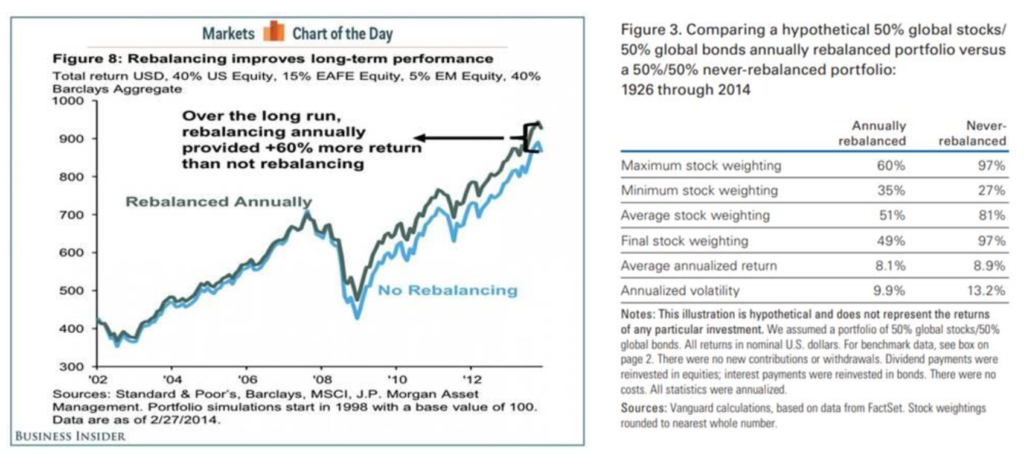
Rebalancing helps control portfolio risk and can contribute to improving risk-adjusted returns over time.

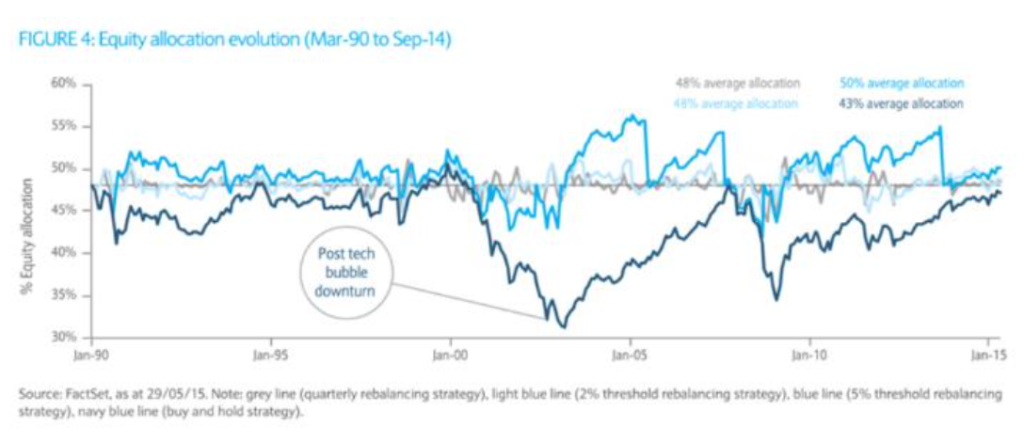
Put simply, rebalancing ensures that the portfolio remains within its desired allocation over time. This is necessary because the relative value of the different assets that make up the investment portfolio naturally changes over time and, consequently, the percentage relationship between them also changes as a result. The practice of rebalancing ensures that your portfolio stays on the desired course.

In theory, a successful investor should buy a given financial instrument at a “low” price and sell it at a “high” price (“buy low… sell high!”). This strategy seems simple, but it is extremely difficult to implement. Rebalancing, however, effectively provides a systematic discipline of buying and selling without the need to try to anticipate market movements. The phenomenon of mean reversion suggests that asset prices will, sooner or later, return to their average value. Historically, various assets and asset classes have shown tendencies towards mean reversion over long periods, although this behaviour is not guaranteed.

In practice, rebalancing a portfolio involves selling assets that have outperformed and, for that reason, exceed the initial allocation and, conversely, increasing positions that have underperformed and are therefore below the target percentage. Unconsciously, the investor is implementing a “buy low and sell high” approach and, at the same time, preventing certain positions from increasing the portfolio’s overall risk.

Defining the Asset Allocation will make it possible to determine the frequency and which rebalancing transactions are required, according to the mix defined among the different asset classes and the limits set for each class. Ideally, maximum and minimum limits should be defined for each asset class, as well as a “fluctuation band”. This is because, of course, the magnitude of the variations must be taken into account. Rebalancing too frequently increases costs that, at times, may not be justified by the size of the adjustment. In fact, when it comes to rebalancing, we cannot ignore costs. One solution is to rebalance the portfolio with new contributions (cash, realised gains, reinvested dividends or received interest) and avoid the additional costs of redemption transactions.

For many investors, rebalancing is counterintuitive and emotionally difficult to manage. However, following the tactical allocation defined for your risk profile is essential. In short, why does rebalancing make sense?

  • Risk management;
  • Counter-cyclical decisions;
  • Discipline

At Golden Wealth Management, based on your profile, we design the ideal solution for your portfolio. Golden’s allocation approach focuses on maximising the total return of a diversified portfolio, ensuring transparent risk management that is appropriate to your investment profile. Tactical allocation builds on strategic allocation, but regularly adjusts the portfolio to respond to changing market conditions, forecasts, and convictions.

Retirement: The End of the Public Dependency Illusion

Otto von Bismarck designed the German pension system in 1880 on a simple premise: the young finance the old. In 1880, life expectancy and demographics made this model sustainable. In 2026, it is a model under extreme pressure.

If you base your retirement plan on the hope that the State will maintain your standard of living, reality is your greatest risk.

Why doesn’t the current system guarantee your future?

  1. The demographic inversion: In 1950, there were nearly 7 workers for every retiree in the EU. Today, there are only 3.5. The system is being drained at an exponential rate.
  2. The GDP limit: States spend, on average, 8% of GDP on pensions. With high public debt, there’s no room to maneuver. Out of necessity, the trend is toward freezing or reducing benefits in real terms.
  3. The cost of (poorly applied) safety: Public systems are, as a rule, required to invest in low-return public debt. In a scenario where inflation erodes purchasing power, what is “safe” ends up being the riskiest option for your wealth in the long run.

The solution isn’t saving, it’s managing

Studies such as the UBS International Pension Gap Index confirm it: the public system only covers the basics. To maintain your lifestyle, public savings are a complement, never the central pillar.

The real question isn’t “how much will I receive?”, it’s “how much capital do I need to never have to depend on a state pension?”.

  • Avoid the “average effect”: Private savings without a strategy are just idle money. Allocation should be intelligent, diversified and, above all, designed for your specific retirement goal.
  • The time factor: Compound interest doesn’t forgive delays. Retirement planning isn’t about what you’ll do at 65, it’s about how you’re allocating your assets today.

Your next step

Stop treating your retirement as a distant event and start treating it as an asset management project.

Are you on track to secure your standard of living, or are you waiting for reforms that may never come?

Schedule a strategic retirement analysis with one of our Financial Advisors. We’ll define the amount you need for financial freedom and design the strategy to get there.

The 6 “Crassus” Mistakes That Destroy Your Wealth

History holds valuable lessons. In 59 BC, Marcus Crassus — the richest man in Rome — made a fatal mistake: driven by pride and haste, he ignored strategy, took a shortcut through a narrow valley, and led 50,000 soldiers into an ambush. Crassus didn’t fail for lack of resources, but for lack of a plan.

In the world of investing, many investors make equally “Crassus-like” mistakes. Here are the 6 most common and how to avoid them:

1. The “self-confidence” mistake in risk

Investing without a defined risk profile is like navigating without a compass. If you’re aggressive with a conservative product, you lose returns; if you’re conservative with a leveraged product, you won’t sleep well.

The solution? Your profile isn’t an opinion, it’s a metric. We define it with precision before any move in the market.

2. Underestimating the nature of risk

Risk isn’t an “enemy” to avoid, it’s a variable to manage. Those who ignore the possibility of loss aren’t investing, they’re gambling.

The solution? we don’t try to eliminate risk – we manage it. Diversification and ongoing analysis are our tools for protecting capital

3. Lack of diversification (the risk of concentration)

Putting all your eggs in one basket is the fastest shortcut to frustration.

The solution? We build portfolios that balance assets, geographies, and sectors. The goal is resilience: ensuring your portfolio can withstand volatility without losing direction.

4. Investing on instinct, not research

The market doesn’t reward guesswork. Every decision should be based on solid grounds, scenario analysis, and competitive advantages.

The solution? Knowledge is the most valuable asset. Leave the technical analysis to the professionals and focus on your life priorities.

5. Living without a compass (planning)

Investing without a goal is just “setting money aside.” Financial planning is what turns savings into wealth.

The solution? Without a target, any path is too long. We define your strategic vision to ensure every euro works toward a concrete goal

6. Passivity in monitoring

The market is dynamic, but many portfolios remain static for years.

The solution? We monitor your portfolio’s weaknesses and opportunities in real time, adjusting course whenever circumstances demand it.

Crassus’s narrow valley, or a path guided by strategic vision?

Don’t let your wealth fall victim to avoidable ambushes. Schedule a no-obligation meeting and ensure that today’s decisions protect your tomorrow.

Advantages of having a Financial Advisor

The collapse of historic institutions (such as BES or Lehman Brothers) proved that the financial market is unpredictable and that savings require rigorous management. It is in this context that the figure of the Financial Advisor becomes essential, acting as your strategic partner.

What does a Financial Advisor do?

– Alignment with your profile: evaluates your risk tolerance and defines strategies adapted to your real short, medium, and long-term objectives

– Diversification and Efficiency: Optimizes your portfolio by choosing the best assets, geographies, and custody structures, always ensuring cost transparency.

– Vision for the future: Helps plan your family’s financial security and the transition of wealth across generations, translating complex jargon into clear options.

The advantage in practice Imagine a scenario of high inflation and global uncertainty. Instead of reacting emotionally to market drops, your Advisor acts proactively. They analyze the impact independently and rebalance your portfolio in a timely manner — protecting capital against devaluation and seizing new opportunities. The main goal is not just to try to “beat the market,” but to ensure that your plan remains solid.

Peace of Mind and Independence In a world where Central Banks and geopolitics change the rules of the game quickly, having specialized advice ensures you make informed decisions, fully aligned with your interests.

Ready to optimize your investments?

Schedule a non-binding meeting with one of our Financial Advisors and discover how we can protect and enhance your wealth.

Financial Advising: 14 Golden Rules

In managing high-net-worth portfolios, we find that the foundation of success in preserving and growing that wealth lies in behaviours that can be standardised: “History does not repeat itself, but it rhymes.” Mark Twain.

A holistic view of wealth, in which the business sphere, the sphere of real assets (including property, works of art, jewellery, and precious metals), and the sphere of financial assets are both influencers and influenced.

From behavioural patterns, we can establish some rules that may be useful in preserving wealth:

1. Capital Preservation

An investor should always operate on a capital-preservation basis. The risk profile should be used as a limit.

An investor with an aggressive profile should not, nor needs to, be invested at all times.

2. Risk must be assumed in advance

There is no return without taking risk. What matters is understanding the risk to which we are exposed, so that we can then assume it.

3. Cash is king

Maintaining liquidity in the portfolio should be regarded as an important asset to hold. Accept the cost of maintaining high levels of liquidity as a powerful tool.

4. Diversification should be pursued

In all its breadth—asset classes, geographic regions, issuers, financial intermediaries, to name only the main ones.

5. Be consistent.

The same rationale that leads to the investment decision in a position should also be used to define your exit.

6. Surf the wave

Once invested, let profits “run”, with the intention of benefiting from the trend.

7. Be pragmatic

At the time of investing, the objective is always to sell at a higher price than the purchase price.

8. Never increase a losing position without defining a stop loss in advance

When we intend to add to an asset which, despite its negative performance, we believe has recovery potential, we should set in advance a limit price at which we must exit the position if our scenario does not materialise.

9. Invest based on facts

Do not invest for personal reasons. Accumulated financial wealth has a history that

must be preserved.

10. Conflicts of interest

It is important to bear in mind that financial intermediaries may lose money when they extend credit, but inevitably this same balance becomes positive when they manage third-party assets.

11. In periods of low returns, fees, taxes, and dividends are highly relevant

Being demanding is important. With the current transparency required by MiFID II, it is important, when making decisions, to carefully analyse all associated costs: direct and indirect.

12. The market tends to revert to the mean in the long term

The law of supply and demand is a concept we should understand and accept.

13. Be as disciplined as possible

All major losses are associated with failing to comply with this rule.

14. Understand and accept human nature

The human factor leads to “infractions”, the main ones being:

  1. Overconfidence, which leads to a lack of discipline
  2. Inability to manage large amounts of information, which sometimes generates overconfidence
  3. In times of widespread declines, the need for “company”
  4. Anchoring that prevents objectivity

Source: The Kirk Report

The rules presented are not binding. Common sense should always prevail. The time horizon may mean that some rules are far more important than others.

From investment to return: 3 possible Private Equity exit routes

What is Private Equity?

Private Equity is an asset class based on the use of private capital to invest in companies that are not listed on a stock exchange. A large share of transactions in this industry involves a significant capital injection and, in some cases, that capital is financed largely through debt. One of the most famous debt-financed deals was KKR’s acquisition of RJR Nabisco in 1989, for around $24 billion (approximately $104 per share). This transaction is an example of what is known as a take-private transaction—a situation in which a Private Equity fund acquires a publicly listed company with the aim of taking it off the public market, managing it privately, away from the pressures and regulatory obligations associated with being listed. The value was considered astronomical at the time, and the corporate drama surrounding it was immortalised in a best-selling book and a film, both with the same name: Barbarians at the Gate.

How does a Private Equity fund work?

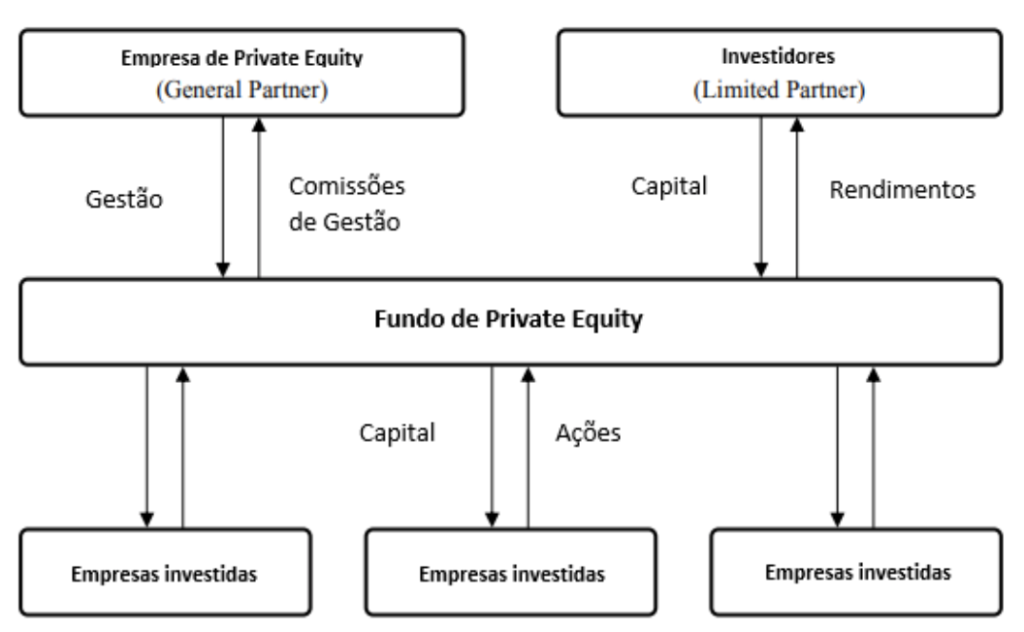
To begin an investment, the Private Equity firm first creates a vehicle specifically for that purpose: a closed-end fund. This fund is typically made up of two types of participants: limited partners and general partners.

The general partners are represented by the Private Equity firm itself, commonly referred to as the Management Company, and are responsible for establishing and managing the fund. They typically contribute around 2% of the total capital.

The limited partners—who contribute the remaining 98%—are typically institutional investors such as pension funds, insurance companies or sovereign wealth funds, as well as high-net-worth individuals (HNWIs) seeking to diversify their portfolios with exposure to alternative assets.

3 ways to exit a Private Equity investment

After investing in and managing a portfolio of companies, the time comes when the fund needs to realise its return—that is, to sell its holdings. This decision is known as an exit strategy, and it is one of the most debated topics within the venture capital ecosystem, as it makes it possible, to some extent, to draw conclusions about the ability to generate returns and the value creation of the Private Equity industry for the economy.

Below are some of the most common exit strategies used in Private Equity.

Secondary buyout

In this model, a Private Equity firm sells one of its portfolio companies to another Private Equity firm. It is an option that generates some controversy: if the first fund has worked on the company for several years—improving margins, optimising costs and strengthening cash flow generation—the question remains as to how much room for improvement is left for the second. In practice, this exit tends to occur when a fund is nearing the end of its life cycle, which puts pressure on fund managers to find a quick and smooth way to deliver returns to limited partners. The inability to exit an investment quickly can damage the reputation of the fund and the GP, making it harder to raise capital in the future. For the buyer, it may represent an opportunity to extract value that the seller, due to lack of time or some other reason, was unable to realise.

Trade Sale

In this case, the Private Equity firm sells its stake to a strategic buyer—typically a company operating in the same sector as the portfolio company. Because it knows the market well, this type of buyer is often willing to pay a premium for the acquisition and tends to move more swiftly through due diligence processes. Like a secondary buyout, this is a fast and flexible exit, allowing the fund to sell its stake in full and immediately.

IPO

An Initial Public Offering (IPO) is the exit strategy in which the company is listed on a stock exchange, making its shares available for trading in the market. The return for the Private Equity fund results from the difference between the amount initially invested and the value realised from selling the shares in the market—plus any dividends and other returns generated over the holding period.

It is common for the fund to sign a lock-up agreement—often required by the banks coordinating the transaction—which prevents the sale of the remaining shares for a period of 6 to 12 months after the IPO, avoiding immediate selling pressure on the stock. An IPO is generally seen as a sign of quality: it is usually the best companies in the portfolio that reach the market in this way.

Investing in Times of War

Last week, several news outlets recalled a 2014 interview with Warren Buffett regarding the Russian invasion of Ukrainian soil. In that interview, Buffett stated that “the last thing you should do is hold cash during a period of war.” He also said that, during World War II, the stock market gained value, continued to gain value in the following years, and that the US economy actually grew in the years that followed.

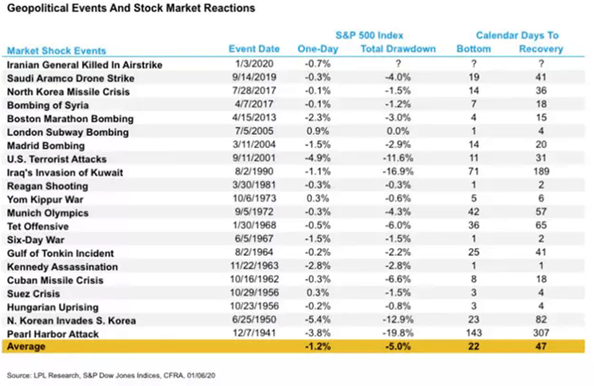
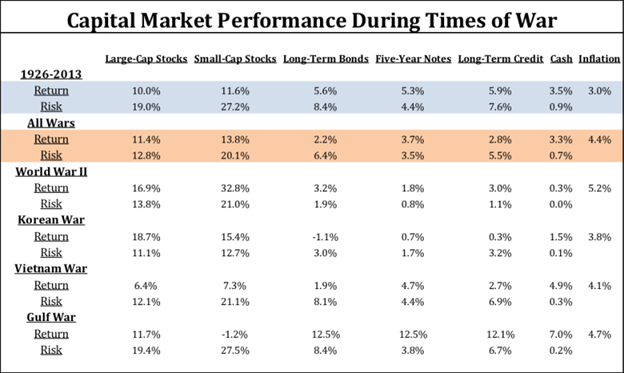
In a historical analysis between 1941 and 2020 of the S&P 500 index in relation to war-related events and terrorist attacks, it can be observed that:

  • After the attack on Pearl Harbor in 1941, the US declaring war on Japan that December, and Germany declaring war on the US, this index gained 15.3% a year later.
  • On average, this index has fallen by around 6.5% during the 3 months following the start of an armed conflict and risen by around 13% 12 months later.
  • In both the Vietnam War and the Gulf War, this index’s declines were short-lived, while the gains lasted much longer.

Another historical analysis worth making is of the bond market and its comparison with the stock market.

In an analysis between 1926 and 2013, although fixed income serves to protect portfolios from greater volatility, historical data show that this asset class has consistently been an underperformer, both on average and during periods of war.

The explanation for this may be related to inflation, which has had a negative correlation with bonds. During periods of war, governments tend to increase their debt, raising the yield on their securities and driving down the price of bonds on the market.

Sources: S&P 500 Index for large-Cap stocks; CRSP Deciles 6-10 for small-cap stocks; long-term US government bonds for long-term bonds; five-year US Treasury notes for five-year notes; long-term US corporate bonds for long-term credit; one-month Treasury bills for cash; and the Consumer Price Index for inflation. All index returns are total returns for that index. Returns for a war-time period are calculated as the returns of the index four months before the war and during the entire war itself. Returns for “All Wars” are the annualized geometric return of the index over all “war-time periods.” Risk is the annualized standard deviation of the index over the given period. Past performance is not indicative of future results.

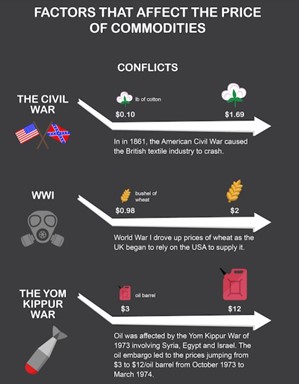
Commodities are another asset class that has been affected during periods of war, as they directly and indirectly impact each country’s economy.

Back in the 19th century, cotton was booming, closely tied to slavery in the southern states. The US sold its cotton mainly to Manchester and Liverpool, and with the outbreak of violent conflicts that led to the Civil War in 1861, cotton prices rose by more than 1,500%, causing the United Kingdom’s economy to collapse.

During World War II, the United Kingdom suffered another economic squeeze when, due to a wheat price increase of more than 100%, the US was forced to cut its production and, consequently, its exports.

The Yom Kippur War in 1973, which pitted Syria and Egypt against Israel, caused oil prices to surge 300%, triggering an oil crisis and, consequently, a global economic crisis, as the Arab OPEC countries boycotted sales of this commodity to the US and to the European countries that supported Israel.

The current Russia-Ukraine conflict is highly significant because it coincides with one of the largest potential increases in inflation since World War II. This is also why financial markets are experiencing a significant rise in volatility. Investors are closely watching inflation and the measures each central bank is taking to control it.

The key to investing, whether in times of war or otherwise, is diversification.

Talk to us.

For Over Thirty Years, the Financial Advisor’s Demise Has Been Predicted

In 1998, E*TRADE gave investors direct access to the stock exchanges for the first time. Until then, buying a share meant calling a broker, who would execute the order and charge a generous commission for it. Suddenly, anyone could do it themselves, in seconds, for a fraction of the cost. The threat seemed existential: if the client can execute trades alone, why would they need an intermediary?

In 2008, “robo-advisors” went further still. They didn’t just execute orders – they built diversified portfolios, rebalanced automatically, and did it all at close to zero cost. The promise was seductive: professional management, without the professional’s price tag. Betterment and Wealthfront refined this model and were explicit about their ambition: the human advisor was an unnecessary cost that technology had made redundant.

In 2020, Zoom removed the geographic friction from the relationship – if physical presence was no longer necessary, the local advisor lost one of their most tangible advantages. And in 2022, ChatGPT demonstrated that a machine could answer, in natural language and within seconds, some of the questions that once required years of financial training.

Each of these moments was real. Each technology did exactly what it promised.

And yet, the financial advisor did not disappear.

The narrative is always the same: technology will make the advisor obsolete. The client will manage their own money. Costs will approach zero. The human element will disappear from the equation.

Except it didn’t.

Today, there are seven times more financial advisors than there were in 1998. The industry is growing faster than most professions. And Betterment itself – the very company that declared advisors obsolete a decade ago – now sells software to support financial advisors.

The confusion stems from a distinction that is rarely made clearly: the difference between the execution layer and the value layer.

The execution layer – buying and selling assets, rebalancing portfolios, comparing funds, processing orders – has always been, and will continue to be, progressively automated. That’s a good thing. It means fewer errors, lower costs, greater speed. Technology does this better than any human, and it would be foolish to resist that reality.

But the value layer is different. And this is where the financial advisor is irreplaceable.

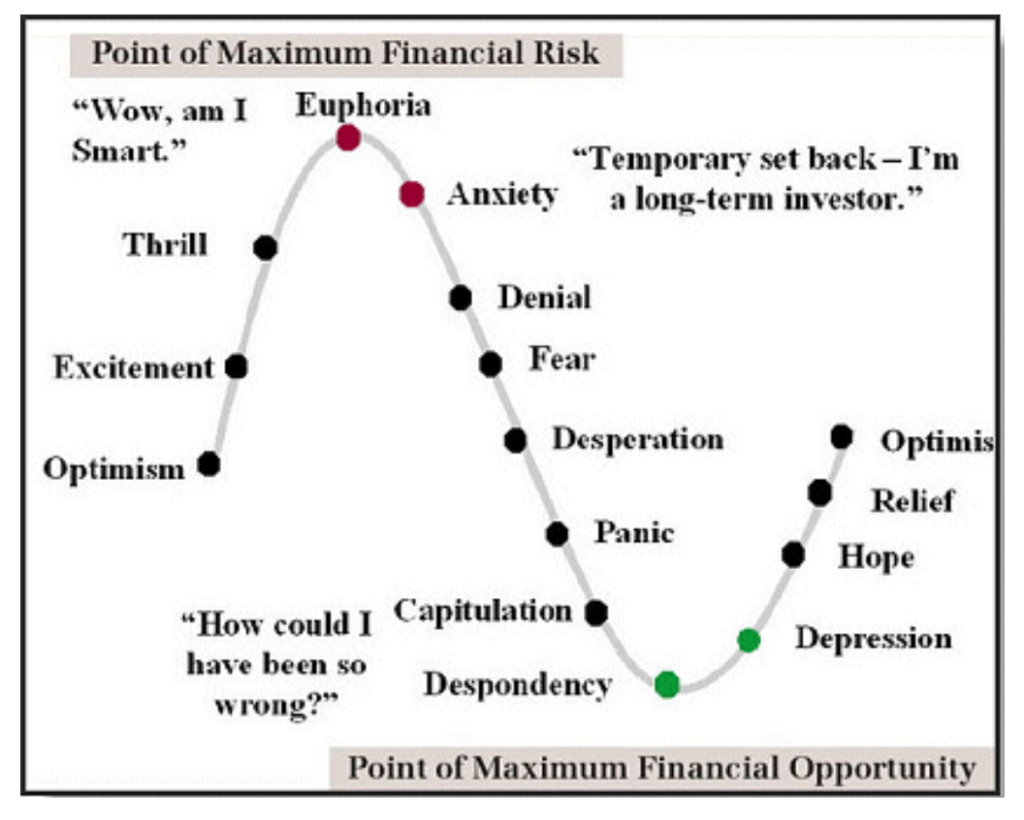
When markets fall ten percent in a matter of days, the client doesn’t need an algorithm. They need a voice to help them avoid rash, “emotional” decisions. Panic selling at the lows, for instance, followed by failing to re-enter at the highs, is the pattern that destroys more wealth than any crisis…

No app can replace human conversation in that moment.

When someone decides to retire early, sell their business, move abroad, or plan the transfer of wealth to their children, the decision isn’t a mathematical one. It’s contextual, emotional, and deeply personal. It calls for someone who knows the person’s history and values – not a model optimizing for a single isolated goal.

The empirical evidence is clear and consistent: clients who work with a financial advisor feel less anxious about their financial future, save more, and build wealth at a faster annual rate than those who manage their money on their own. Over the years, this difference compounds into extraordinary figures.

And the most revealing finding of all: this added value doesn’t come from stock picking, market timing, or even asset allocation. It comes exclusively from “someone” who helps the client stay the course when everything around them suggests abandoning it. From “someone” who asks the right questions before a difficult decision. From “someone” who translates market noise into context that’s understandable and actionable.

This cannot be automated.

Artificial Intelligence tools will automate administrative work, speed up analysis, personalize communication at scale, and free up time. A lot of time. And that time will be reinvested in what truly sets us apart: Trust.